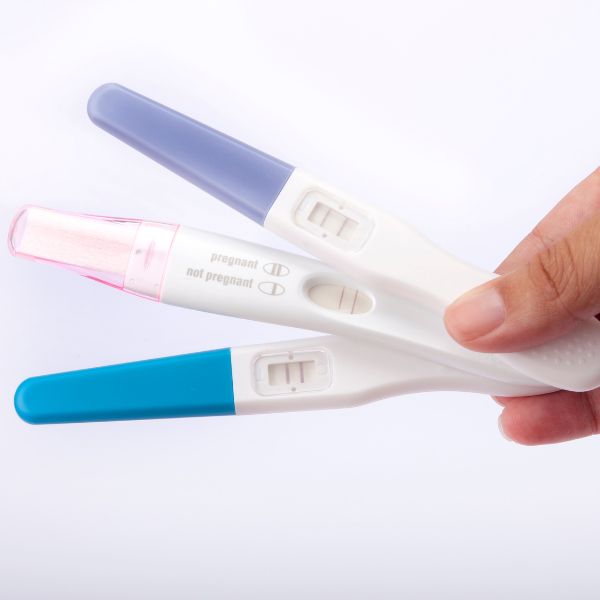
When should you take a pregnancy test while on the pill?


When taking a contraceptive pill, we often assume that the risk of pregnancy is very low, as it is considered highly effective. However, have you always taken your pill consistently and correctly?
Discover our products designed to support you with all your health, nutrition, and care-related questions. With a team of medical and beauty experts, we are able to guide you by carefully analyzing your needs and providing tailored recommendations.
Feel free to share any doubts or concerns so we can help you find the right answers together.
Pregnancy test while on the pill: key points to remember
- The contraceptive pill is about 99% effective with perfect use, but not 100%
- A missed pill increases the risk of pregnancy
- The pill does not affect the reliability of a pregnancy test
- A test is recommended 3 weeks after unprotected intercourse
- If the test is positive while on the pill, you should consult a healthcare professional promptly
When should you take a pregnancy test while on the pill?
In case of a missed pill
Oops! Even when being careful, missing a pill can happen. Don’t panic—here’s what to do. If you realize it the next day, whether you had intercourse or not, take the missed pill immediately. It doesn’t matter if you end up taking two pills in the same day. Then continue taking your pill as usual at your regular time. If you had unprotected intercourse in the 5 days before the missed pill, or if you missed two pills from the same pack, take the morning-after pill as emergency contraception. Make sure to use a condom for the next 7 days.
Common misconceptions about the pill
You may have heard many claims questioning the effectiveness of the pill or suggesting it changes your body. Does it really cause weight gain? Affect your mood? Lead to infertility? Cause acne? Rather than relying on others’ experiences, it’s best to consult your gynecologist. They can help you choose the pill best suited to your body, lifestyle, and medical history. Since each person’s metabolism is different, the effects can vary from one individual to another.
What is the reliability of a pregnancy test while on the pill?
If you experience symptoms of a possible pregnancy, it is advisable to take a pregnancy test. While the contraceptive pill provides protection, it does not completely eliminate the risk of pregnancy.
A pregnancy test is highly reliable, even if you are on the pill. Oral contraceptives do not affect how pregnancy tests work. However, it is important to take the test at the right time: from the day a pill is missed, about 3 weeks after your last unprotected intercourse, or as soon as pregnancy symptoms appear.
For greater accuracy, you can also take a blood pregnancy test in addition to a urine test.
What should you do if the result is positive while you are on the contraceptive pill?
There is no such thing as zero risk. Although the pill is highly effective, it cannot guarantee 100% protection against pregnancy. If a pregnancy test is positive while you are on the pill: first of all, don’t panic! It may be due to a change in how you’ve been taking your pill. It could also mean that your current contraceptive pill is no longer fully suited to your body—even after years of use. Taking your pill at irregular times can reduce its effectiveness, as can certain medications like some antibiotics, which may interfere with its protective effect. Always try to take your pill at the same time each day to maintain consistent hormone levels.
Pregnancy while on the pill does not necessarily happen immediately. It is possible that conception occurred even if you continued taking your pill regularly. There is no need to panic—studies have not shown harmful effects of the pill on fetal development. However, it is important to consult a doctor or healthcare professional as soon as possible for proper guidance.
What are the other possible methods of contraception?
The pill is not the only method of contraception available. If you do not take the pill or wish to stop using it, there are other alternatives that are just as effective. However, stopping the pill is not without consequences, so it is recommended to follow your doctor’s advice before discontinuing it.
The male condom is one of the most popular contraceptive methods. When used correctly, it can be up to 98% effective. It is single-use and must be properly rolled onto an erect penis and not be damaged. A torn or expired condom reduces effectiveness and increases the risk of pregnancy and sexually transmitted infections (STIs).
The implant is a contraceptive method placed under the skin that releases hormones to block ovulation. It lasts up to 3 years and is about 99.9% effective. However, it does not protect against STIs, only against pregnancy.
For protection similar to the pill, you can opt for a contraceptive patch. Easy to use and comfortable, it is up to 99.7% effective by preventing ovulation. The patch must be replaced weekly, usually for three weeks per cycle.
Other contraceptive methods include the vaginal ring, cervical cap, female condom, and diaphragm. For optimal protection, dual protection (e.g., condom + hormonal method) is often recommended.
At what age can the contraceptive pill be prescribed?
Before using a contraceptive pill, it is important to consult a doctor or gynecologist. The pill is only available with a prescription. There is no strictly defined age for prescribing it, as various health factors must be considered.
Generally, the contraceptive pill may be prescribed from around the age of 15 in certain cases, such as irregular periods or hormonal acne, in addition to preventing pregnancy. In some situations, prescribing the pill during puberty can be beneficial.
- Nausea.
- Unusual fatigue.
- Sensitive or swollen breasts.
- Lower abdominal pain.
- Unusual bleeding.
These symptoms may vary from one woman to another.
- Certain antibiotics.
- Certain anti-epileptic treatments.
- St. John’s Wort.
- Certain hormonal treatments.
Seek advice from a doctor or pharmacist, especially if you are taking any ongoing medication.
- Yes: implant, patch, vaginal ring, IUD, etc.
- Condoms (male or female) also protect against STIs.
- The choice depends on your lifestyle and medical profile.