Sommaire

Are you looking for the ideal bottle for your baby? With the wide variety of models available on the market, it can be difficult to make the right choice. To make things easier for you, we have analyzed the best options available and selected the top 5 baby bottles.

In this article, you will discover the bottles best suited to your little one’s needs, combining quality, safety, and practicality. Whether you are breastfeeding or using infant formula, these bottles have been selected to meet the expectations of the most demanding parents and to make your baby’s feeding experience easier.

Key Information: How to Choose the Right Baby Bottle

  • The baby bottle should be adapted to the baby’s age and sucking rhythm to ensure comfortable and safe feeding.

  • Anti-colic systems are essential to help limit air intake, colic, gas, and spit-up.

  • The choice of nipple (silicone or latex, physiological/biomimetic shape) greatly influences bottle acceptance, especially during mixed feeding (breastfeeding and bottle feeding).

  • The bottle material (BPA/BPS-free plastic or glass) affects practicality, durability, and health safety.

  • It is normal to try several models before finding the bottle that best suits your baby’s needs.

However pleasant the opportunity to breastfeed your baby may be, at some point you will probably need to give them a bottle—whether because you are returning to work, letting someone else handle nighttime feedings, or simply going out for a few hours without your baby.

In this case, you can use a breast pump, but it can sometimes be a stressful experience, especially if your baby has been exclusively breastfed until now.

The Best Baby Bottles for Babies

Bottle Recommended Age Material Nipple Type Main Advantage Ideal For
Dodie Multi-Perforated Nipple Anti-Colic Biomimetic Bottle Flow 2 – 270 ml 0 – 6 months BPA-free plastic Biomimetic, multi-perforated, flow 2 Mimics the natural sucking motion of the breast Mixed feeding
Luc et Léa ErgOsense Savanna 270 ml From 2 months BPA-free plastic Physiological silicone Ergonomic grip Active and independent babies
Natural Wave Glass Bottle 240 ml – Lansinoh From birth Glass Natural Wave Respects natural sucking behavior Breast-to-bottle transition
Avent Natural Glass Bottle 120 ml – Newborn From birth Glass Newborn flow silicone Healthy and natural material First bottles
NUK First Choice+ Silicone 150 ml with Temperature Control 0 – 6 months Polyamide Silicone size M Integrated temperature indicator Small feedings

1. First stage: From birth – Dodie Biomimetic Anti-Colic Bottle with Multi-Perforated Nipple Flow 2 – 270 ml

Although the World Health Organization recommends breastfeeding during the first months of life, some families choose to use a bottle from birth or as a supplement to breastfeeding.

The Dodie Biomimetic Anti-Colic Bottle (270 ml) is designed for babies from birth. It features a multi-perforated nipple with flow 2, inspired by the mother’s breast, which closely reproduces a baby’s natural sucking motion.
Thanks to its integrated anti-colic system, air is properly regulated during feeding, helping to reduce colic, gas, and spit-up.

The biomimetic nipple promotes a smooth transition between breast and bottle, especially in cases of mixed feeding. Easy to handle, this bottle is BPA- and BPS-free, in accordance with current safety standards.

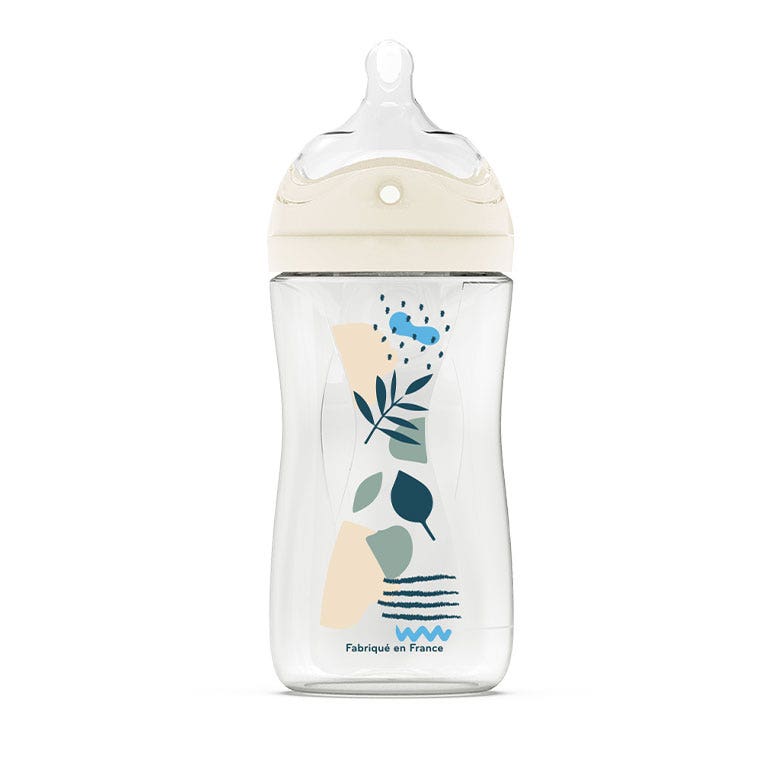
2. From 2 months: Ergosense Savanna 270 ml Plastic Bottle – Luc et Léa

The Ergosense Savanna bottle by Luc et Léa is suitable for babies from 2 months. Its ergonomic shape has been specially designed to make it easier to hold for both parents and babies.

Equipped with a physiological silicone nipple, this bottle respects the child’s natural sucking rhythm and limits air intake thanks to its effective anti-colic system. Its 270 ml capacity is perfect for daily feedings as your baby grows.

Made from high-quality plastic free from controversial substances, it combines lightness, durability, and practicality for everyday use. Its playful Savanna design also adds a soft and reassuring visual touch.

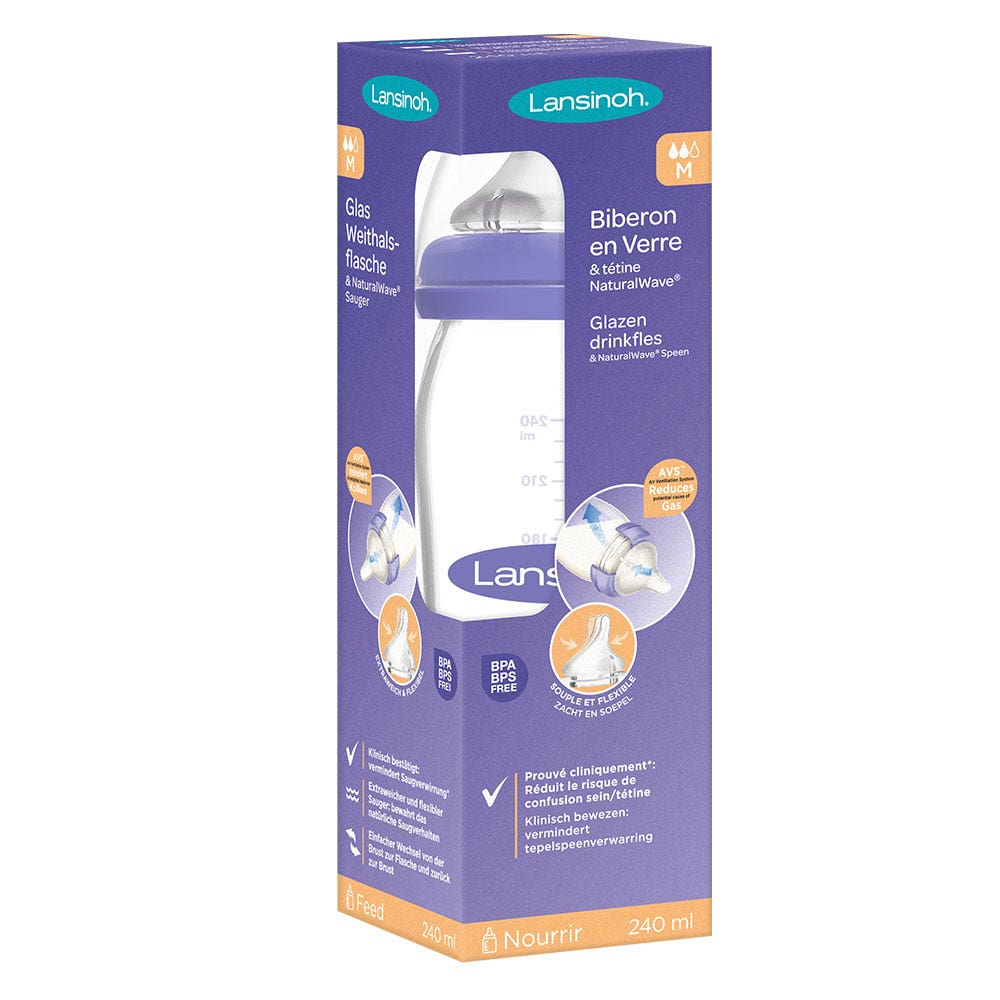
3. Glass option: Natural Wave Glass Bottle 240 ml – Lansinoh

The Lansinoh Natural Wave glass bottle is ideal for parents looking for a durable and safe material. Made from high-quality glass, it is strong, hygienic, and easy to clean.

Its Natural Wave nipple is designed to mimic the shape and movements of the mother’s breast, promoting natural suction and respecting the baby’s feeding habits. It is particularly recommended for breastfed babies, as it makes switching between breast and bottle easier.

This bottle helps ensure the baby’s comfort and a calm feeding experience while reassuring parents who prioritize high-quality materials.

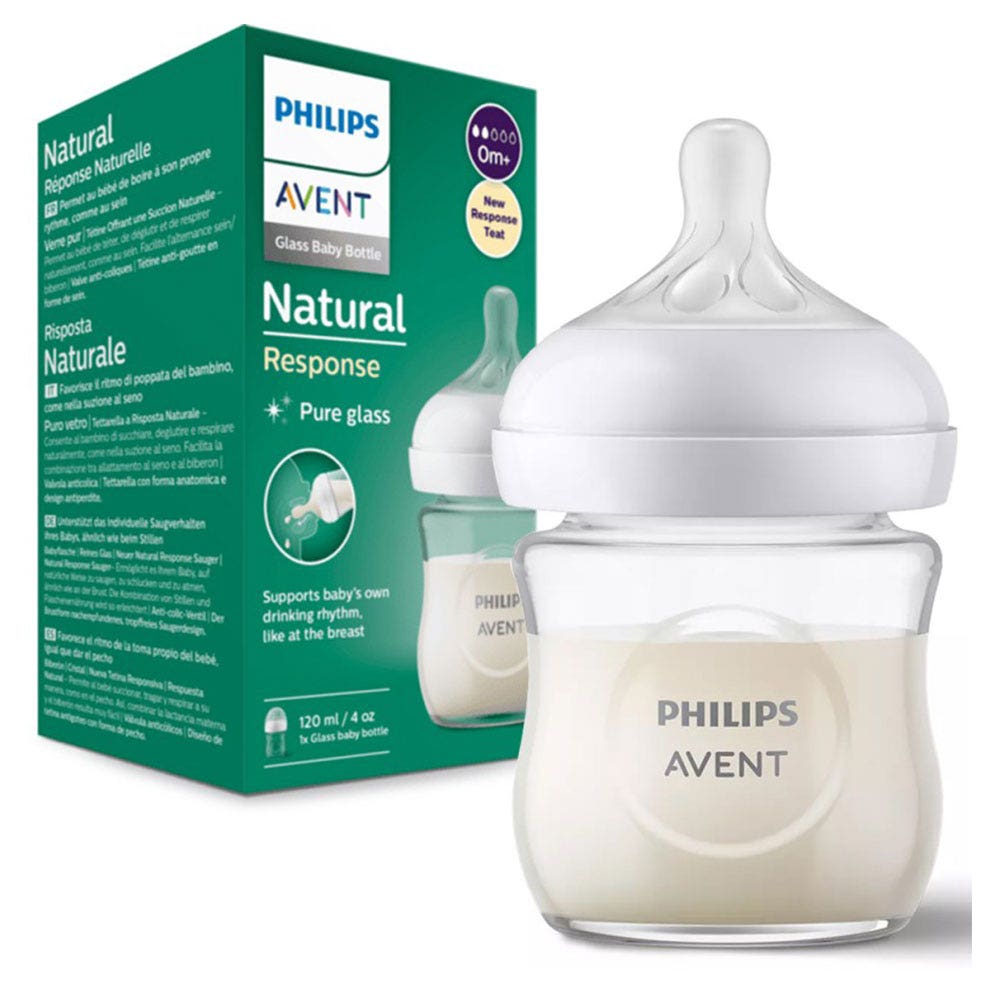
4. Most popular: Philips Avent Natural Glass Bottle with Silicone Newborn Nipple – 120 ml

Highly appreciated by parents, the Philips Avent Natural glass bottle is designed for newborns. Its 120 ml capacity is ideal for the first feedings.

The Natural silicone nipple remains constantly filled with milk, which helps reduce air intake and limits colic, gas, and reflux. It allows for a more natural latch, similar to breastfeeding.

The glass material ensures excellent hygiene and durability, while the overall bottle design promotes comfortable and efficient feeding from the very first days of life.

5. For smaller amounts: NUK First Choice+ 150 ml Bottle with Temperature Control

The NUK First Choice+ bottle is ideal for newborns and babies who drink smaller amounts of milk. Its size M silicone nipple is flexible, soft, and clinically tested.

Its improved anti-colic system reduces air intake during feeding, helping support the baby’s digestive comfort. The Temperature Control technology provides a useful visual indicator to ensure that the milk is at the right temperature.

Made from polyamide (PA), this bottle is lightweight, durable, and transparent, making it easy to monitor the amount of milk consumed. A practical and reassuring solution for the first months.


Biberon Bebe
The Ideal Baby Bottle for Your Baby

How to Choose a Baby Bottle?

Choosing the ideal baby bottle for your baby is not always easy, but the key is to consider several important factors. Here are some essential elements to keep in mind to make the best choice.

1. Bottle materials

In general, there are two main types of materials used for baby bottles: plastic and glass.Plastic bottles are lightweight, shock-resistant, and often more affordable. However, make sure they are BPA-free (bisphenol A) and comply with current safety standards.Glass bottles are more eco-friendly, durable, and free from chemical substances. On the other hand, they are heavier and can break more easily.

2. Bottle Shape and Size

Baby bottles come in different shapes and sizes. Some have a straight design, while others are curved or angled to make them easier to hold and to help reduce air intake during feeding. Bottle sizes also vary depending on the baby’s age and the amount of milk they drink. Make sure to choose a bottle that is appropriate for your baby’s age and feeding needs.

3. Nipple Type

The nipple is an essential part of the bottle. It is important to choose one that matches your baby’s age and sucking rhythm. Nipples are generally made from latex or silicone.

Latex nipples are more flexible and closer in feel to the mother’s breast, while silicone nipples are more durable and long-lasting.

4. Nipple Flow Rate

The flow rate of the nipple depends on your baby’s age and sucking ability. In general, there are three types of flow: slow, medium, and fast.

Younger babies usually need a slow flow to match their natural sucking rhythm, while older babies can handle a faster flow.

5. Anti-Colic Features

Anti-colic bottles are designed to reduce air intake and limit the risk of colic, gas, and spit-up. They often include ventilation systems or special valves that allow better air circulation and prevent bubbles from forming in the milk.

If your baby experiences colic, these bottles may be a helpful option to consider.

By taking these criteria into account, you will be able to choose a bottle that suits both your baby’s needs and your preferences as a parent. Don’t hesitate to try several options to find the one that works best for your child.

Should You Choose a Silicone or Rubber Nipple?

1. Silicone Nipples

Silicone nipples are transparent, odorless, and very durable. They are more resistant than rubber ones and keep their shape longer, making them more hygienic and easier to clean. In addition, silicone nipples do not pose a risk of latex allergy, which can be an advantage for sensitive babies.

Drawback: silicone nipples are generally firmer than rubber ones, which may make the sucking experience feel less natural for some babies.

2. Rubber (Latex) Nipples

Rubber or latex nipples are softer and more elastic than silicone ones, offering a feeling closer to breastfeeding. Their soft texture and flexibility may be preferred by some babies, especially those who have difficulty adapting to silicone nipples.

Small drawback: rubber nipples usually do not last as long as silicone ones. They tend to wear out more quickly, which means they need to be replaced more often. In addition, some people may be allergic to latex, which can be an issue for sensitive babies.

3. So, Which One Should You Choose?

The choice between a silicone or rubber nipple will depend on your baby’s needs and preferences, as well as your concerns about durability and potential allergies. You may want to try both types of nipples to see which one your baby prefers.

Remember to regularly check the condition of the nipples and replace them when necessary, whether they are made of silicone or rubber.

How Many Baby Bottles Should You Buy?

For Babies Exclusively Bottle-Fed

If your baby is exclusively formula-fed, you will likely need 6 to 8 bottles per day. This allows you to prepare enough feedings for the entire day without constantly having to wash bottles.

For Babies Fed Both Breast and Bottle

If you breastfeed and supplement with bottles, you will need fewer bottles. In general, 3 to 4 bottles are usually enough.
This allows you to give your baby breast milk or infant formula while always having a few clean bottles available. You can also store expressed milk so that other people, such as the father, can help with feeding.

For Slightly Older Babies

As your baby grows and begins to eat solid foods, they will need fewer bottles. You can usually reduce the number to 3 or 4 bottles per day for liquid meals.

It is also important to consider the storage time of breast milk or prepared formula. Preparing several bottles in advance can be helpful if you plan to store multiple feedings.

Keep in mind that every baby is different, and you may need to adjust the number of bottles depending on your child’s specific needs. Start with a small number and add more if necessary. Also remember to regularly check the condition of bottles and nipples and replace them when needed.

These posts may interest you